


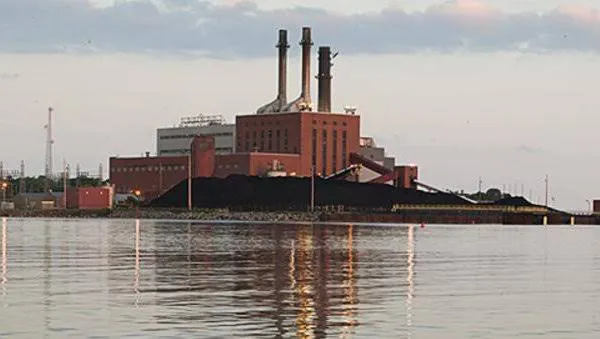
Our power grids (e.g., PJM Interconnection, NY-ISO, ISO-NE, SPP, etc.) are "under assault" from massively rising load growth, the vast majority being hyperscale data centers that seemingly arise from nowhere. The Trump administration's Department of Energy, in response, has issued emergency orders to force several coal-fueled plants to remain online or return to service after closure. But that's warranted or reasonable only in specific circumstances, and in most cases, it's bad policy as well as bad business.
The mechanism that DOE uses to compel coal-fired plants to remain available is typically §202(c) of the Federal Power Act, 16 U.S.C. §824a(c), implemented through DOE’s regulations at 10 C.F.R. §§205.370–205.379; §301(b) of the DOE Organization Act, which supplies the DOE Secretary’s authority, and President Trump’s Executive Order 14262 (April 8, 2025) that explicitly directed DOE to streamline and expedite use of §202(c) to retain generation resources identified as critical to reliability.
However, a closer look is in order. The orders themselves are temporary and last 90 days; they compel availability/operation during the declared emergency, require compliance with environmental law to the maximum extent feasible, and provide a mechanism for the affected utility to seek cost recovery. In other words, the administration's practical strategy has been “keep selected retiring coal assets physically available through serial 90-day emergency orders, then spread the resulting costs through FERC-approved regional cost-recovery mechanisms.” That description is supported by the orders and filings themselves, but whether §202(c) legally permits repeated use is now an active judicial question.
Now for some practicalities: Most coal plants only make sense as baseload plants, designed and operated to provide a consistent level of electricity for many hours of the day and year. Contrast this with "peaker" plants, almost exclusively simple-cycle gas turbines, which can rapidly ramp up and down to follow changes in demand. It can take many hours, and in some cases at least an entire day, for a baseload coal plant to go from cold shutdown to a minimum load/output. Moreover, the U.S. coal-fired power fleet is about 45 years old on average; some of the oldest units still operating date to the early 1950s--meaning they're senior citizens in their 70s--including TVA’s Shawnee plant in Kentucky (1953), Barry in Alabama (1954), Kingston in Tennessee (1954), and Clifty Creek in Indiana and Kyger Creek in Ohio (both 1955). And the last large (>100 MW) coal-fired plant built in the U.S. was Sandy Creek Energy Station in Texas, which entered service 13 years ago; a smaller 99-MW coal CHP plant, Spiritwood in North Dakota, began operating in 2014 but later converted to natural gas.
And here's a scorecard for coal plants in the USA: CAISO, zero operating coal; NYISO: zero operating coal; ISO-NE: just one remaining coal plant (Merrimack). However, PJM, MISO, SPP and ERCOT each have substantial operating coal fleets.
As far as policy goes, well, it's simply not the place of government to order a generating resource to return to service after they're closed or mothballed, or to remain in service when slated for closure. That's the job of the grid operator, and only if needed to maintain grid reliability, and that must first be determined by a reliability study, and subject to applicable market rules and the regulatory framework. If the study finds a need, the grid operator and the generator typically negotiate an RMR, "Reliability Must Run," agreement. Even so, a legitimate retirement decision by a generator is not something a U.S. RTO such as PJM ordinarily has the authority to overturn, absent an extraordinary statutory emergency authority.
Finally: there is just one (1) new, planned coal plant, in any grid region's interconnection queue, which has even a remote possibility of being built, the 450-MW ERAS-2025-009 / “Grec #1 Interconnect 161kV Substation” project in Mayes County (Chouteau), Oklahoma, in SPP, submitted October 1, 2025. SPP's own active-request database says it is coal, 450 MW, with a scheduled commercial-operation date of October 1, 2026. So even this one is not going to make COD, if it even gets built.
Coal plants have a role in supporting our grids, but they are life-limited and are being phased out for economic reasons, beyond environmental issues, across every grid region where they still exist. I said so on the record nine years ago when I was spokesman for NRG.