


If you work in solar energy, you already know the pace of change is accelerating—but the next 24 months will redefine what "distributed energy" actually means.
We're moving beyond the era of simple rooftop PV and static net metering into a dynamic ecosystem where intelligence, flexibility, and community-scale collaboration drive value. For consultants, installers, and forward-thinking homeowners, staying ahead isn't optional; it's the difference between leading the market and reacting to it.
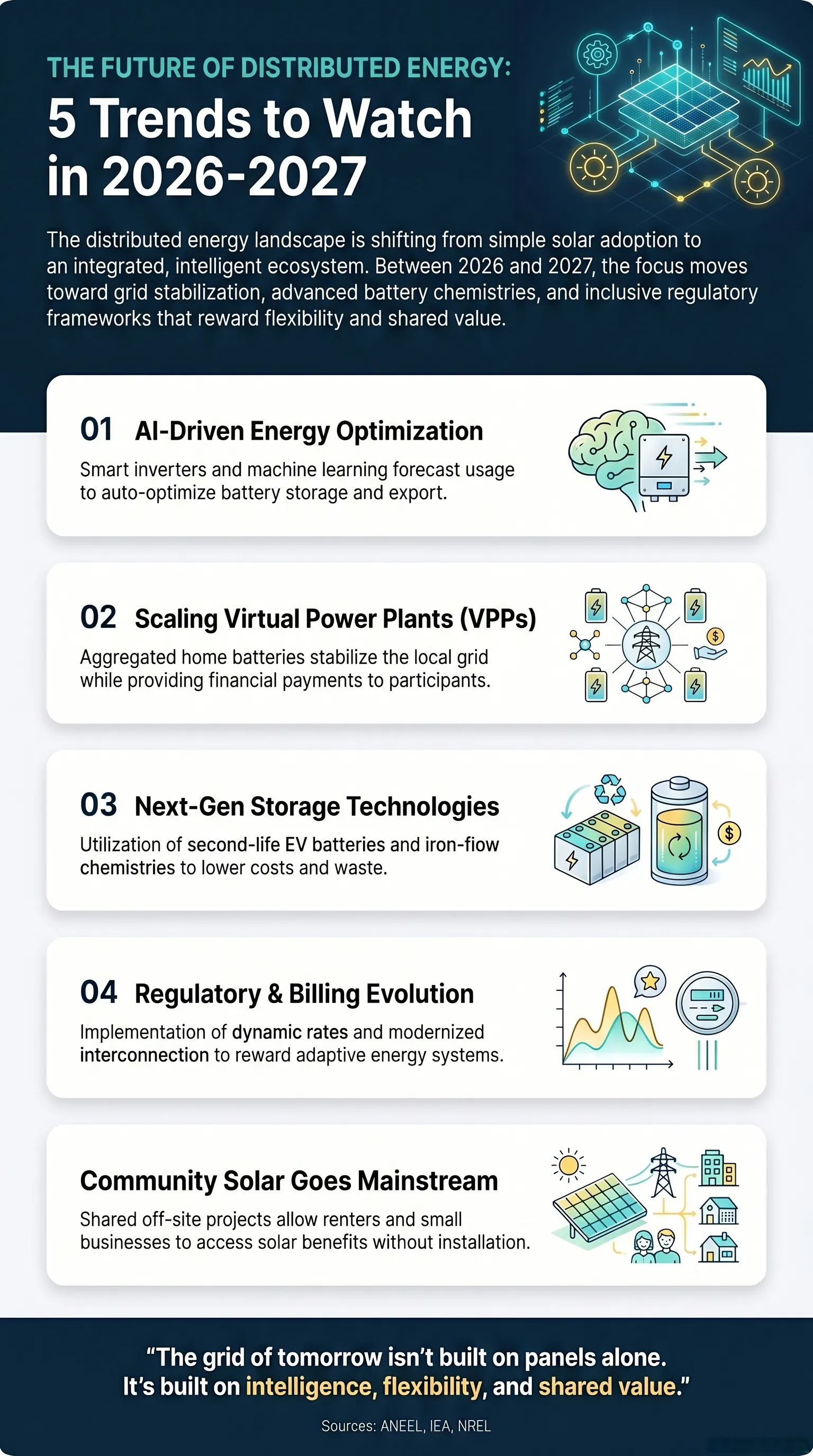
1 - AI-driven energy management is shifting from "nice-to-have" to essential. Smart inverters paired with machine learning algorithms now forecast production and consumption patterns in real time, automatically optimizing when to store, use, or export power—maximizing savings without homeowner intervention.
2 - Virtual Power Plants (VPPs) are scaling rapidly: aggregated residential batteries and solar systems are being dispatched by utilities to stabilize the grid, creating new revenue streams for participants.
3 - Battery storage is evolving beyond lithium-ion; expect wider adoption of second-life EV batteries, iron-flow chemistries, and modular designs that lower lifetime costs and extend system resilience.
4 - Regulatory frameworks are catching up: dynamic time-of-use rates, expanded interconnection pathways, and modernized net billing structures will reward flexibility over fixed production. Fifth, community solar and shared ownership models are breaking geographic barriers, enabling renters, condo owners, and small businesses to access solar benefits without rooftop eligibility.
I've seen too many professionals double down on yesterday's playbook while the market quietly shifts beneath them. The consultants who thrive in 2026-2027 won't just sell panels—they'll architect energy ecosystems. That means understanding how AI optimization impacts client ROI, navigating VPP participation agreements, sizing storage for both backup and grid services, and advising clients on regulatory changes before they take effect.
Here's the strategic takeaway: distributed energy is no longer about offsetting a bill—it's about participating in a smarter, more resilient grid.
Homeowners gain financial optionality; professionals gain differentiation; and the energy transition gains momentum. If you're evaluating your 2026 strategy or guiding clients through complex decisions, focus on adaptability, data literacy, and regulatory foresight. Which of these trends are you already preparing for?
#DistributedEnergy #SolarInnovation #EnergyStorage #VirtualPowerPlant #SolarTrends #CleanEnergyFuture #SmartGrid #RenewableEnergy #EnergyTransition #SolarProfessional